
Articles & Insights
For technical implementation notes, visit Graylark Labs.

Why Global Restructurings Often Take Longer Than Planned
Global restructurings rarely fall behind because the strategy is flawed. More often, they stall because the corporate programme timeline and the country-level consultation timeline were never properly aligned.
What looks like a single transformation plan at headquarters can quickly become a series of complex local processes, each shaped by different legal obligations, employee representative structures and consultation requirements. Without clear governance, local dependencies remain hidden, milestones drift and programme sponsors lose visibility over whether implementation dates are still realistic.
Successful global restructuring is not simply about moving fast. It is about connecting business objectives with consultation realities from the start, so organisations can manage change lawfully, consistently and with confidence across every affected country.
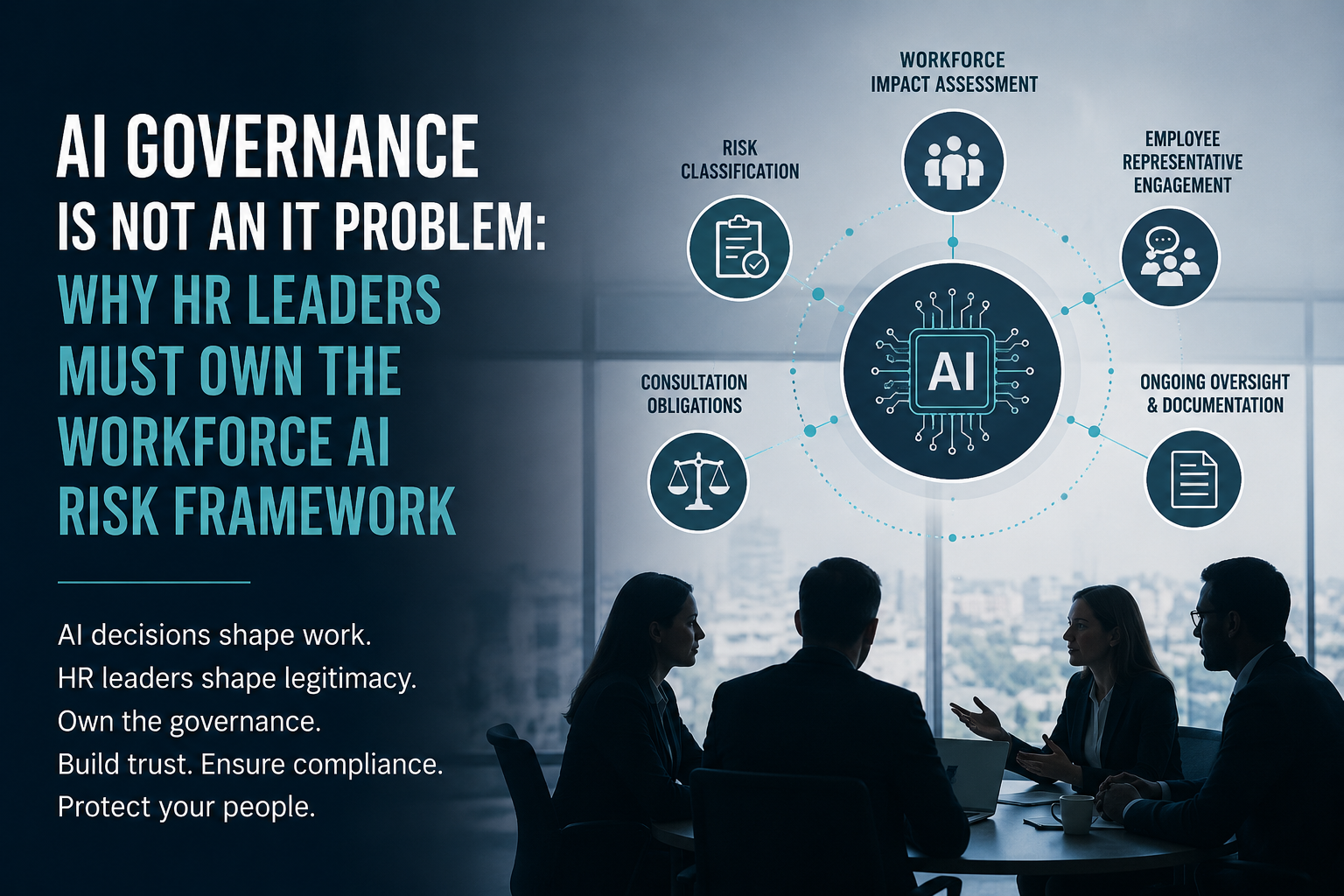
AI Governance Is Not an IT Problem: Why HR Leaders Must Own the Workforce AI Risk Framework
AI governance in the workplace is too often treated as a technical compliance exercise owned by IT. But when AI systems influence scheduling, workload allocation, performance inputs, employee monitoring, or career visibility, they stop being just technology tools. They become workforce governance issues.
For HR and Employee Relations leaders, the real risk is not simply whether an AI model is accurate, secure, or privacy-compliant. The deeper risk is whether its deployment changes working conditions, triggers consultation obligations, affects employee trust, or creates exposure under frameworks such as the EU AI Act, German co-determination rules, UK consultation requirements, or data protection laws.
As AI adoption accelerates, organisations need more than technical safeguards. They need a workforce AI risk framework that classifies impact, documents employee consequences, identifies consultation triggers, engages representative bodies early, and maintains audit-ready governance records.
AI governance is not an IT problem. It is a workforce legitimacy challenge — and HR and ER leaders must own the framework that ensures AI is deployed lawfully, sustainably, and with employee trust intact.

Why works councils matter
Works councils are more than a legal requirement — they’re a practical mechanism for employee representation, transparency, and smoother decision-making. This article explains why works councils matter, how they support mediation and workplace trust, and what employers should consider during change and restructuring.

Why you should track employee representative engagement.
Tracking employee representative engagement isn’t just “relationship management” — it reduces delays, improves communication, and helps prevent costly disputes during business change. This article outlines 10 practical reasons to measure engagement across works councils, EWCs, and other representative bodies so consultation is faster, clearer, and lower-risk.

Are You Ready for the CSRD Directive?
The EU’s Corporate Sustainability Reporting Directive (CSRD) expands sustainability reporting far beyond the old NFRD, with broader scope, more detailed disclosures, and mandatory assurance. This guide breaks down what the CSRD requires, who it applies to, what needs reporting, and the practical steps to prepare now.

Understanding the EU CSDD directive and its impact to employee relations.
The EU Corporate Sustainability Due Diligence (CSDD) Directive requires companies to identify, prevent, and mitigate human rights and environmental harms across their operations and supply chains. This article explains what the directive is, how it affects transparency and employee involvement, and why it can reshape employee relations through stronger accountability, ethics, and labour-management engagement.

Navigating Collective Bargaining: A Practical Guide for Building Stronger Workplace Agreements.
Collective bargaining is more than a formal negotiation — it’s how employers and employee representatives shape fair, workable agreements. This practical guide covers the essentials: legal frameworks, preparation, communication, relationship-building, documenting outcomes, and follow-through to make agreements stick.

Understanding the EU AI Act and Its Impact on Employee Relations and Workplace Consultations.
The EU AI Act regulates the use of AI in the workplace, requiring transparency, accountability, and consultation with employee representatives.
It impacts employee relations by ensuring fair treatment, protecting privacy, and promoting ethical practices in AI deployment, particularly in areas such as recruitment, monitoring, and decision-making.
This legislation helps foster trust between employers and employees while safeguarding workers’ rights in an increasingly AI-driven environment.

When EU Directives Arrive All at Once: A New Era for Labour and Employee Relations.
The EU’s new directives, including the AI Act and Pay Transparency, are transforming Labour and Employee Relations. Multinational companies must navigate complex compliance demands, increased risks, and employee representation requirements. Success requires scalable processes, proactive dialogue, and adaptability. These challenges offer opportunities to strengthen resilience and lead confidently through regulatory change.