
Why employee relations still runs on spreadsheets, and what it costs
Almost every employee relations function we meet is running on a spreadsheet, a shared drive and a mailbox. It is not incompetence. It is what was available.
Spreadsheets are genuinely good at some of this
They are fast to start, free, and they bend to whatever shape the work takes this quarter. For a single country with one works council and an occasional restructure, a spreadsheet is a reasonable answer, and we would not tell you otherwise.
Where it stops working
When the same fact lives in four places. A works council’s composition sits in one file, its agreement in a folder, the last consultation in an email thread and the next meeting in someone’s calendar. Nobody can say with confidence what is true.
When the person who understood it leaves. Institutional memory in employee relations is unusually load-bearing. Commitments made to a body five years ago still bind you, and a spreadsheet does not explain why a column says what it says.
When you need evidence rather than a record. A works council dispute, a court, or an internal audit will ask when information was provided, what was said and who responded. Reconstructing that from mailboxes is expensive and the result is never complete.
When an agreement expires and nobody notices. There is no alert in a shared drive.
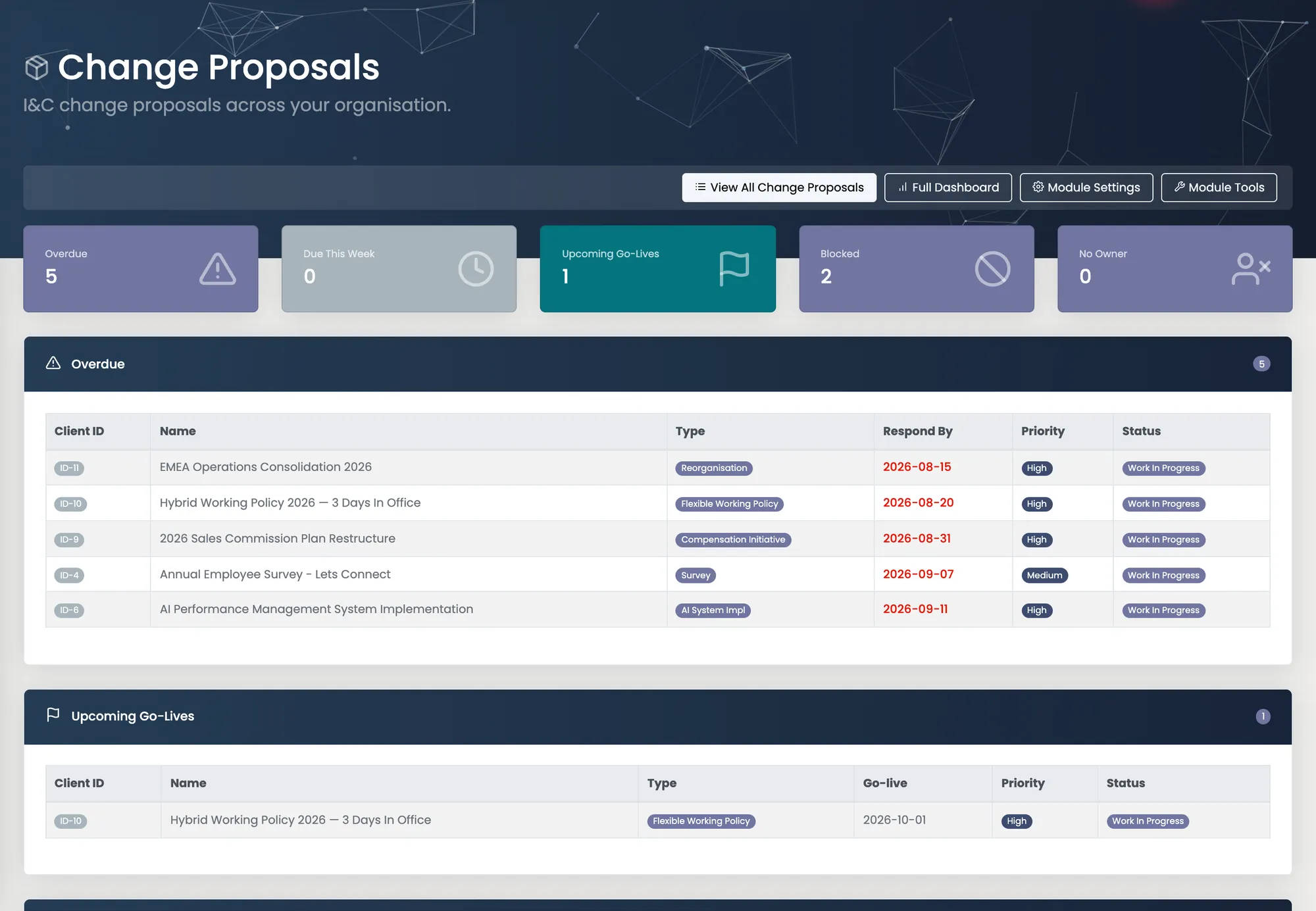
When change becomes continuous. One restructure a year is manageable. A restructure, an AI rollout, a policy harmonisation and a pay transparency programme running at once, across nine countries, is not.
When the auditors arrive. Spreadsheets on shared drives rarely satisfy questions about access control, confidentiality classification or retention.
What changes with a system built for it
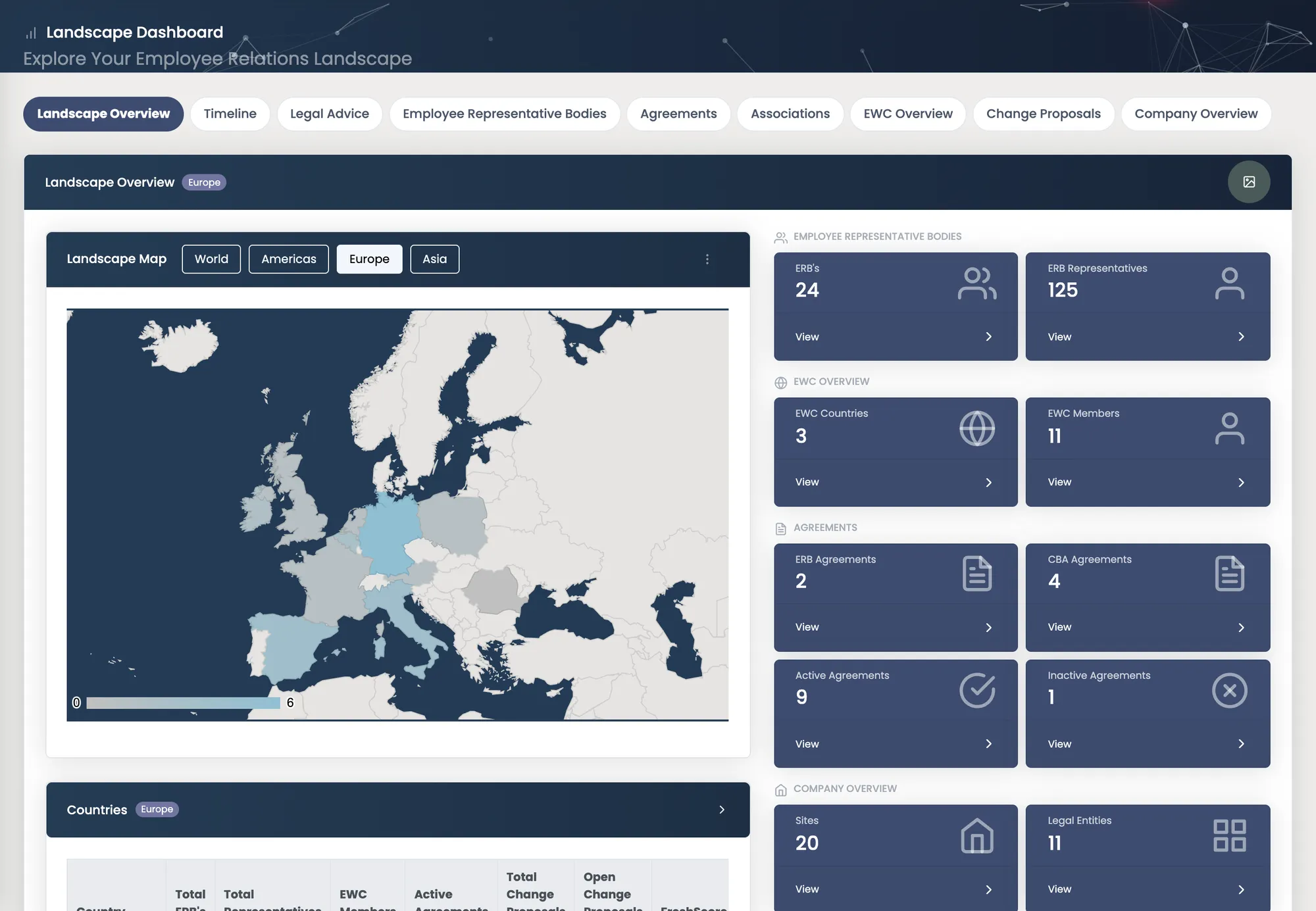
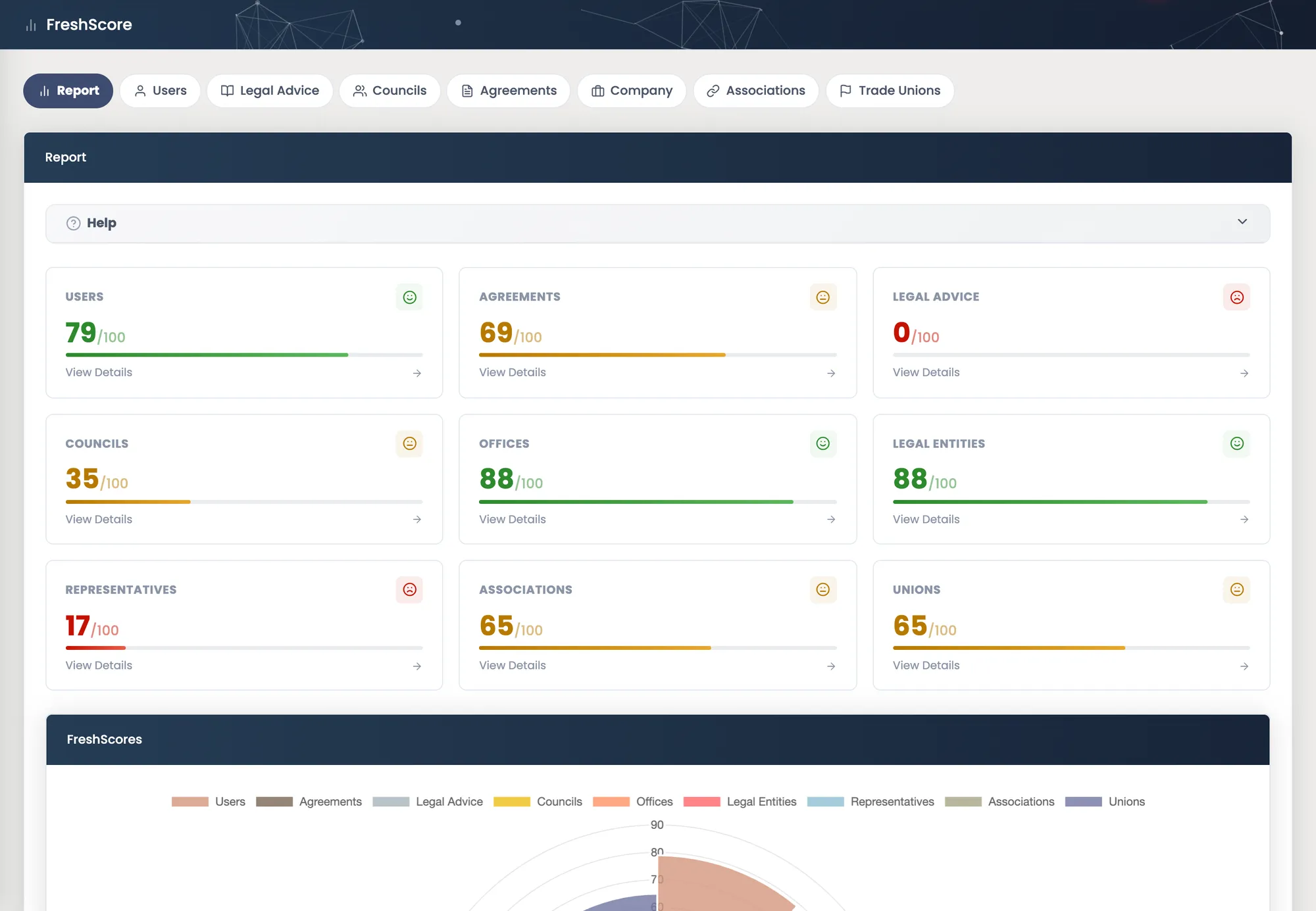
The representation landscape becomes data rather than documents: bodies, entities, agreements, versions and expiry dates, with FreshScore showing what has gone stale. Consultation becomes a tracked process with owners and deadlines rather than a chase. Evidence accumulates as a by-product. Access is scoped by country and business unit, and documents carry confidentiality classification, so a country lead sees their country and no more.
None of that removes judgement from employee relations. It removes the administration that stops the team from applying it.
The honest version
If you have one country, one council and one change a year, keep the spreadsheet. If you have a European footprint, works councils in several countries and change that never really stops, the spreadsheet is already costing you more than it saves. It is just doing so quietly.
See the difference
Book a demo and bring your actual tracker. We will show you what it looks like as a system.
Related: Labour relations management software, Works council management, Information and consultation software.
See it in Graylark.
Built for scrutiny.
Certified and tested
Cyber Essentials certified at Whole Organisation scope, and an independent penetration test of the platform in 2026.
Data inside the EEA
Stored and processed within the European Economic Area, with a dedicated database for each customer.
AI that stays inside
Inference inside Graylark’s EEA environment, no external AI APIs in the customer-data path, and no training on customer data.
Ready for procurement
The security pack, the Data Processing Agreement and the penetration test report are standing documents, sent the same day your security team asks.